How Long Do MRI Results Take?
Key takeaways
- Mira delivers two reports within 3 working days: a medical report for your doctor and a miraclarity report in plain English.
- NHS MRI results typically take 2 to 6 weeks and are sent to your GP, not directly to you.
- US hospital results take 3 to 10 business days and are usually posted to a patient portal.
- Private UK providers generally deliver results within 3 to 7 working days.
- Emergency MRI results are read immediately by on-call radiologists in hospital settings.
- The miraclarity report includes visual body guides, severity indicators, and plain English explanations of every finding.
- You can share your Mira reports digitally with any doctor, specialist, or physiotherapist.
How long do MRI results take? It depends entirely on where you have the scan. NHS results can take 2 to 6 weeks. US hospital results take 3 to 10 business days. With Mira Diagnostics, you receive two reports within 3 working days of your scan. This guide explains what affects results timing, what happens during the reporting process, and how to get your results as quickly as possible.
How Long Do MRI Results Take? A Provider Comparison
The time between your MRI scan and receiving results varies dramatically depending on the provider and healthcare system.
| Provider Type | Typical Results Timeline | How Results Are Delivered |
|---|---|---|
| Mira Diagnostics | 3 working days | Two reports delivered digitally to your Mira account |
| NHS (UK) | 2 - 6 weeks | Sent to your GP by letter. You need a GP appointment to discuss. |
| Private UK hospitals | 3 - 7 working days | Sent to referring consultant or available via patient portal |
| Private UK clinics | 2 - 5 working days | Varies by provider |
| US hospitals | 3 - 10 business days | Posted to patient portal (e.g., MyChart) |
| US freestanding centres | 2 - 5 business days | Sent to ordering physician, sometimes patient portal |
| Emergency MRI (any) | Minutes to hours | Read immediately by on-call radiologist |
The difference in speed is significant. Waiting 6 weeks for NHS results means 6 weeks of uncertainty about what is causing your symptoms. With Mira, you have answers in 2 days.
What Happens After Your MRI Scan?
After your scan, several steps occur before you receive your results. Understanding this process explains why results take different amounts of time at different providers.
- Image acquisition: The MRI scanner captures hundreds of images during your scan. These are stored digitally on the scanner and then transferred to a picture archiving system (PACS).
- Image review by radiographer: The radiographer checks that all images meet technical quality standards. If any sequences are blurred or incomplete, they may be repeated before you leave.
- Radiologist reporting: A consultant radiologist reviews all images, compares them with any previous imaging, and writes a detailed report. This is the most time-consuming step and the main bottleneck.
- Report delivery: The completed report is sent to the referring doctor (NHS/US) or directly to the patient (Mira and some private providers).
- Follow-up: In the NHS, you typically need a GP or specialist appointment to discuss the results. With Mira, the two reports are designed to be understood by both your doctor and you.
Why Do NHS MRI Results Take So Long?
The NHS results pathway involves multiple handoffs and administrative steps that slow down the process.
- Radiologist backlog: NHS radiologists have large workloads. A single radiologist may have hundreds of scans in their reporting queue at any given time.
- Outsourced reporting: Many NHS trusts outsource a portion of their reporting to external teleradiology services, which can add days to the turnaround.
- Administrative processing: Once the radiologist completes the report, it enters an administrative pathway. It must be validated, formatted, and sent to the referring clinician.
- GP letter: Results are sent to your GP by letter or electronically. Your GP then contacts you to discuss the findings, which may involve booking another appointment.
- Specialist pathway: If you were referred by a hospital consultant, results go to the consultant first. They review the results and write to your GP or contact you for a follow-up appointment.
According to NHS England data, the national target is for diagnostic reports to be completed within 2 weeks of the scan, but many trusts do not consistently meet this target due to radiologist staffing pressures.
Why Are MRI Results Faster at Mira?
Mira delivers results within 3 working days because the reporting pathway is designed for speed without compromising quality.
- Dedicated reporting capacity: Our radiologists have allocated reporting slots, so your scan is read within 24 to 3 working days of being performed.
- Direct delivery: Reports go directly to you, not through a chain of administrative intermediaries. You receive them digitally in your Mira account.
- Two reports simultaneously: The medical report and miraclarity report are prepared in parallel, so you receive both within the same 3 working days window.
- No GP gatekeeper: You do not need a follow-up GP appointment to access your results. You receive them, read them, and decide how to proceed.
Get Your MRI Results in 3 working days
Every Mira scan includes two reports - a medical report and a Mira Clarity report in plain English. Book online in under 2 minutes.
Book Your ScanWhat Do MRI Results Look Like?
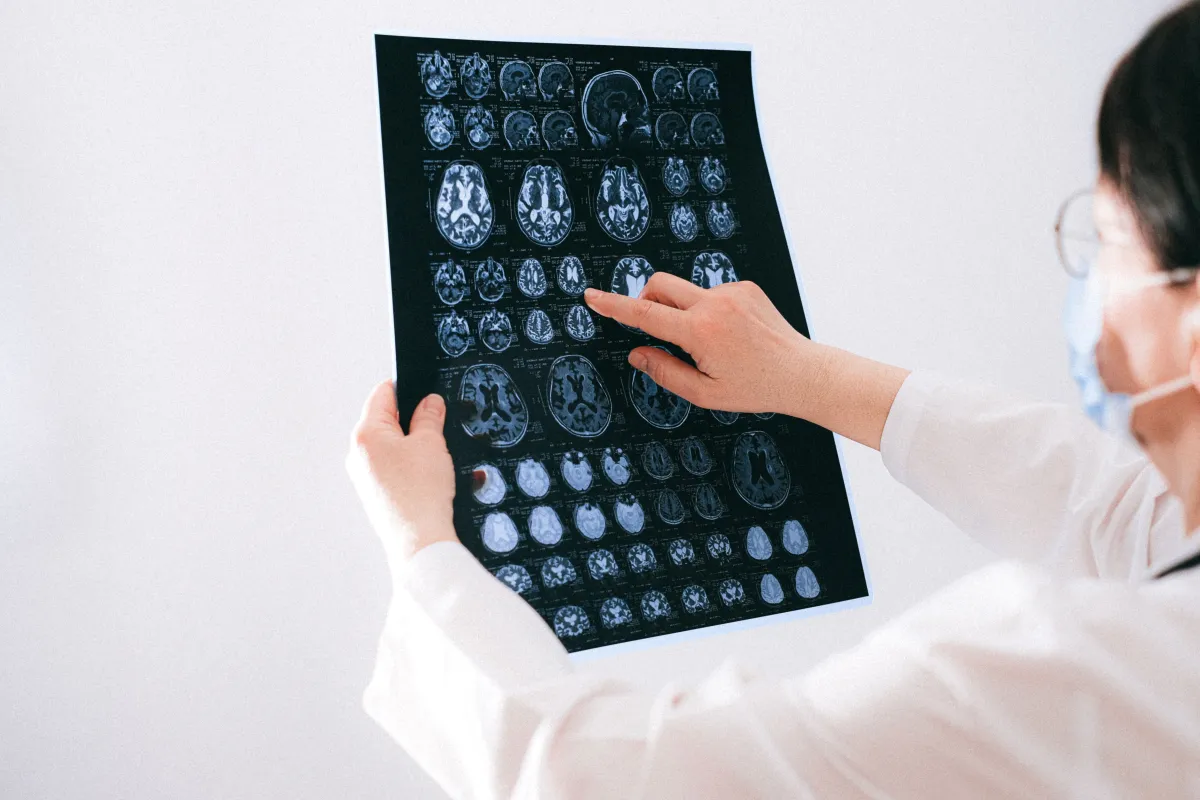
A standard MRI report is a written document, typically 1 to 2 pages, that describes the findings in medical terminology. It follows a structured format.
Standard Medical Report Structure
- Clinical indication: The reason the scan was requested
- Technique: The MRI sequences and protocols used, whether contrast was administered
- Findings: A systematic description of what the radiologist observed, including normal structures and any abnormalities
- Impression / conclusion: A summary of the key findings and a differential diagnosis if applicable
Medical MRI reports are written for physicians. They use standardised terminology that is precise but not always easy for patients to understand. Terms like "there is a broad-based disc protrusion at L4/L5 causing moderate right-sided foraminal stenosis with displacement of the exiting L4 nerve root" are meaningful to a spine surgeon but confusing to most patients.
Mira Clarity Reports: MRI Results You Can Understand
Every Mira scan comes with two reports. The medical report is the standard clinical document for your doctor. The miraclarity report is something different: it translates your findings into plain language that anyone can understand.
What the Mira Clarity Report Includes
- Plain English explanation: Every finding from the medical report is explained in clear, non-technical language. No jargon.
- Visual body guides: Diagrams showing exactly where each finding is located in your body.
- Severity indicators: Each finding is categorised as normal (no action needed), monitor (worth keeping an eye on), or attention (discuss with your doctor).
- Recommended next steps: General guidance on what you might want to discuss with your physician based on the findings.
- Glossary: Key medical terms from your report explained in plain language.
miraclarity is not a replacement for medical advice. It is a communication tool that helps you understand your results and have a more informed conversation with your doctor.
Can You Get MRI Results the Same Day?
Same-day MRI results are available in specific circumstances but are not the norm for routine scans.
- Emergency MRI: If an MRI is performed in an emergency (acute stroke, suspected cauda equina syndrome, emergency neurosurgery planning), the on-call radiologist reads the images immediately.
- Some premium private providers: A few private clinics offer same-day results for an additional fee, sometimes with an immediate consultation with a radiologist or specialist.
- Mira: Results are delivered within 3 working days. Same-day reporting is not standard, but results often arrive within 24 hours for scans completed early in the week.
For routine diagnostic scans, same-day results are unusual because the radiologist needs time to review all images carefully, compare with previous imaging, and write a thorough report. Rushing this process risks missing findings or making errors.
What to Do While Waiting for MRI Results
Waiting for MRI results can be stressful, especially if you are concerned about a serious condition. Here are some practical suggestions.
- Continue your normal activities unless your doctor has told you otherwise.
- Continue any prescribed treatment, physiotherapy, or pain management.
- Avoid catastrophising. Many MRI findings are benign or age-related and do not indicate serious disease.
- Write down questions you want to ask your doctor when you get your results.
- If you are in pain, use the pain management strategies your doctor has recommended. Do not wait for MRI results to start basic treatment.
- If your symptoms suddenly worsen while waiting (new weakness, loss of bladder control, sudden severe pain), seek immediate medical attention regardless of pending results.
How to Read Your MRI Results
If you receive a standard medical MRI report, here are some terms you may encounter and what they mean.
| Term | What It Means |
|---|---|
| Unremarkable / normal study | Nothing abnormal was found |
| Within normal limits | The structures look normal for your age |
| Degenerative changes | Wear-and-tear changes, common with age |
| Disc protrusion / herniation | A disc is bulging or has ruptured |
| Stenosis | Narrowing of a canal or passage |
| Effusion | Fluid accumulation (e.g., in a joint) |
| Signal abnormality | An area that looks different from normal tissue on MRI |
| Oedema | Swelling or fluid in the tissue |
| Enhancement (with contrast) | An area that lights up with contrast, suggesting inflammation, tumour, or infection |
| Clinical correlation recommended | The radiologist suggests the finding should be assessed in the context of your symptoms |
| Follow-up recommended | The finding should be monitored with a repeat scan at a future date |
With a miraclarity report, you do not need to decode these terms yourself. Every finding is explained in plain English with context about what it means for you.
Who to Contact About Your MRI Results
The appropriate next step after receiving your results depends on what the scan shows.
- Normal results: Share with your GP or physician for their records. No further action is typically needed.
- Minor findings (e.g., small cyst, age-related changes): Discuss with your GP at your next routine appointment. These usually do not require urgent follow-up.
- Significant findings (e.g., disc herniation, ligament tear, suspicious mass): Book an appointment with your GP or specialist to discuss treatment options. Your Mira medical report gives them the clinical detail they need.
- Urgent findings: In the rare event that the radiologist identifies something that needs urgent attention, Mira will contact you directly in addition to delivering the reports.
Book Your MRI with Mira
Two reports in 3 working days. Scans from £369 (UK) or $369 (US). Book online in under 2 minutes.
Book Your ScanFrequently asked questions
How long do MRI results take?
With Mira, 3 working days. NHS results take 2 to 6 weeks. US hospital results take 3 to 10 business days. Private UK clinics typically take 3 to 7 working days.
Can I get MRI results the same day?
Same-day results are available for emergency MRIs and at some premium private providers. Mira delivers results within 3 working days, with many arriving within 24 hours for early-week scans.
Why do NHS MRI results take so long?
NHS results are delayed by radiologist workload, administrative processing, and the GP communication pathway. The report must be written, validated, sent to your GP, and then you need a GP appointment to discuss it.
Who reads my MRI results?
A consultant radiologist (a doctor specialising in medical imaging) reviews all MRI images and writes the report. With Mira, the same radiologist findings are then translated into a miraclarity report for patient understanding.
Can I call the hospital for my MRI results?
In most cases, NHS hospitals will not give results over the phone. Results are sent to your referring clinician. US hospitals may direct you to their patient portal. With Mira, results are delivered directly to your account.
What is a Mira Clarity report?
miraclarity is a plain English report included free with every Mira scan. It explains your findings in non-technical language, includes visual body guides showing where findings are located, and categorises each finding as normal, monitor, or attention.
Can I share my MRI results with my doctor?
Yes. Mira reports are delivered digitally and can be shared with any doctor, specialist, physiotherapist, or surgeon. The medical report contains the clinical detail they need.
What if my MRI shows something urgent?
If the radiologist identifies a finding that requires urgent medical attention, Mira will contact you directly in addition to delivering the reports. For emergency symptoms, always go to A&E or the ER immediately rather than waiting for results.
Do I need a follow-up appointment after MRI results?
It depends on the findings. Normal results may not need a follow-up. Significant findings should be discussed with your GP or specialist. Your miraclarity report provides guidance on recommended next steps.
Can I access my MRI images?
With Mira, your images and reports are available through your digital account. You can share them with any healthcare provider. NHS patients can request images through a Subject Access Request, though this can take weeks.
Final thoughts
MRI results speed varies from 3 working days (Mira) to 6 weeks (NHS). The waiting period between your scan and your results does not have to be long. Choosing a provider with fast turnaround means faster answers, earlier treatment, and less time spent worrying.
With Mira, every scan includes two reports delivered within 3 working days: a medical report for your doctor and a miraclarity report that explains your findings in plain English with visual guides and severity indicators. No GP referral needed (UK), no insurance paperwork (US). Book your MRI and get answers in days, not weeks.