Prostate MRI in the UK: Cost and What to Expect
Key takeaways
- A private prostate MRI (mpMRI) costs from £499 with Mira at the Kent scanning centre. NHS prostate MRI is free but involves significant waiting times.
- Multiparametric MRI (mpMRI) is the recommended first-line investigation before prostate biopsy, following updated NICE guidelines.
- Prostate MRI can detect clinically significant prostate cancer with a sensitivity of around 90%, reducing the need for unnecessary biopsies.
- No GP referral is needed to book a prostate MRI through Mira. Self-referral is accepted.
- The scan takes 30 to 45 minutes. No special preparation is required beyond avoiding ejaculation for 72 hours beforehand.
- Every Mira scan includes two reports: a medical report for your GP and a miraclarity report in plain English.
- Results are delivered within 3 working days of your scan.
- Prostate cancer is the most common cancer in men in the UK, with over 52,000 new cases diagnosed each year.
A prostate MRI scan is the most accurate non-invasive way to assess the prostate gland for cancer, enlargement, and other conditions. In the UK, multiparametric MRI (mpMRI) is now the recommended first step before biopsy for men with suspected prostate cancer. A private prostate mpMRI with Mira Diagnostics costs from £499 at our accredited scanning centre in Kent (Bluewater, Dartford), with no GP referral required and results delivered within 3 working days.
Prostate MRI Cost in the UK
Prostate MRI is a specialist scan that uses multiparametric imaging (mpMRI), which combines multiple MRI sequences to assess the prostate gland in detail. This makes it more complex than a standard MRI, which is reflected in the pricing.
| Provider Type | Typical Price | Includes Report? |
|---|---|---|
| Mira (Kent scanning centre) | From £499 | Yes - two reports included |
| Regional private clinics | £550 - £900 | Usually one report |
| London private clinics | £700 - £1,100 | Usually one report |
| Harley Street / premium London | £900 - £1,400 | One report, consultation may cost extra |
| NHS (with referral) | Free | One report sent to urologist |
Mira pricing includes the mpMRI scan, consultant radiologist interpretation, a medical report, and a miraclarity report. There are no additional charges for booking, reporting, or image access.
What Is a Multiparametric Prostate MRI (mpMRI)?
A multiparametric MRI combines several MRI techniques in a single scan session to provide the most complete assessment of the prostate gland. The "multiparametric" part refers to the multiple types of image data collected.
The Three Key Sequences
- T2-weighted imaging: Provides detailed anatomical images of the prostate, showing its zones, capsule, and surrounding structures. This sequence is best for identifying structural abnormalities.
- Diffusion-weighted imaging (DWI): Measures the movement of water molecules in tissue. Cancer cells are tightly packed, restricting water movement, which shows up as bright areas on DWI. This is the most sensitive sequence for detecting clinically significant cancer.
- Dynamic contrast-enhanced (DCE) imaging: Gadolinium contrast is injected intravenously, and images are taken as it flows through the prostate. Cancer tissue takes up contrast differently from normal tissue. This sequence adds specificity to the overall assessment.
By combining all three sequences, mpMRI achieves a sensitivity of approximately 90% for detecting clinically significant prostate cancer, according to a landmark study published in The Lancet (the PROMIS trial). This means mpMRI correctly identifies 9 out of 10 significant cancers.
When Do You Need a Prostate MRI?
Several clinical scenarios warrant a prostate MRI. The most common reason is investigation of a raised PSA (prostate-specific antigen) level or an abnormal digital rectal examination.
- Raised PSA level: Your GP may order a PSA blood test if you have urinary symptoms or as part of a health check. A raised PSA does not mean you have cancer, but it warrants further investigation. mpMRI is now the recommended next step before biopsy.
- Abnormal digital rectal examination: If your GP finds a firm or irregular area during a rectal examination, MRI helps characterise the abnormality.
- Active surveillance of known prostate cancer: Men on active surveillance for low-risk prostate cancer have regular mpMRI scans to monitor for progression.
- Pre-biopsy assessment: NICE guidelines recommend mpMRI before any prostate biopsy. If the MRI shows no suspicious areas (PI-RADS 1-2), biopsy can often be avoided.
- Staging of confirmed prostate cancer: MRI helps determine whether cancer is confined to the prostate or has spread to surrounding structures.
- Urinary symptoms: Difficulty urinating, weak stream, frequent urination, or incomplete emptying can be caused by benign prostatic hyperplasia (BPH), which MRI can assess.
- Family history: Men with a first-degree relative diagnosed with prostate cancer have a 2 to 3 times higher risk and may choose to have a prostate MRI for peace of mind.
PI-RADS Scoring: Understanding Prostate MRI Results
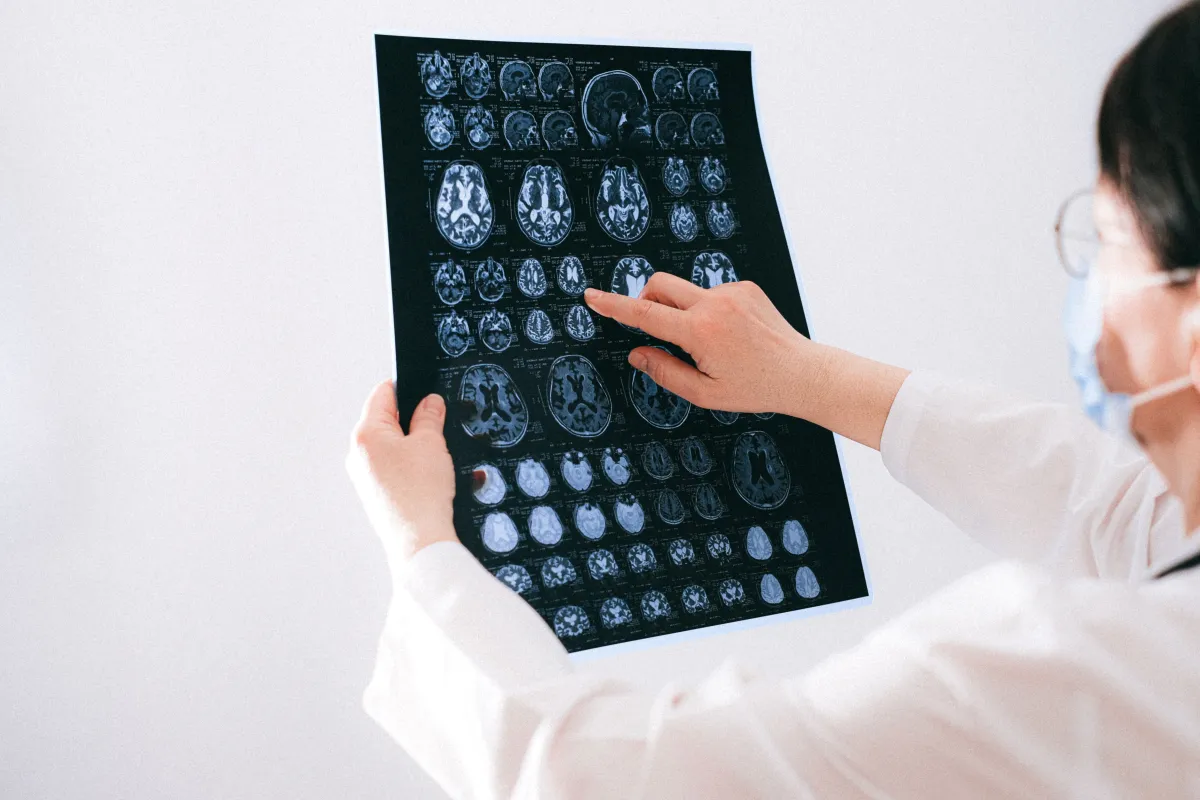
Prostate MRI results use a standardised scoring system called PI-RADS (Prostate Imaging Reporting and Data System). The radiologist assigns a score from 1 to 5 based on the likelihood that a finding represents clinically significant cancer.
| PI-RADS Score | Meaning | Typical Next Step |
|---|---|---|
| 1 | Very low - clinically significant cancer is highly unlikely | Routine monitoring, no biopsy needed |
| 2 | Low - clinically significant cancer is unlikely | Routine monitoring, no biopsy needed |
| 3 | Intermediate - the presence of clinically significant cancer is equivocal | Clinical discussion, biopsy may be considered |
| 4 | High - clinically significant cancer is likely | Biopsy recommended |
| 5 | Very high - clinically significant cancer is highly likely | Biopsy strongly recommended |
A PI-RADS score of 1 or 2 is reassuring and typically means biopsy is not needed. According to a study in the journal European Urology, up to 28% of men referred for prostate biopsy can avoid the procedure altogether when mpMRI is used first, because the MRI shows no suspicious lesions.
Your miraclarity report explains your PI-RADS score in plain English, what it means for you, and what the recommended next steps are. It does not replace medical advice but gives you a clear understanding before you see your GP or urologist.
Book Your Prostate MRI
Private prostate mpMRI from £499 in Kent. No GP referral needed. Two reports included. Results in 3 working days.
Book Prostate MRINHS Prostate MRI Waiting Times vs Private
The NHS prostate cancer pathway has improved significantly since the introduction of the 28-day faster diagnosis standard. However, real-world waiting times still vary by region and demand.
| Step | NHS Timeline | Mira (Private) |
|---|---|---|
| GP appointment for PSA test | 1 - 2 weeks | Not needed (self-referral) |
| PSA result | 1 week | N/A |
| GP referral to urology | 1 - 3 weeks | Not needed |
| Urology appointment | 2 - 4 weeks | Not needed |
| mpMRI scan | 2 - 6 weeks after urology | Same week availability |
| Results and follow-up | 1 - 3 weeks | 3 working days |
| Total: first concern to results | 8 - 19 weeks | 2 - 7 days |
For men who are anxious about a raised PSA or have a strong family history of prostate cancer, the psychological burden of waiting weeks or months for answers can be significant. A private prostate MRI through Mira provides results within 3 working days, allowing you to take your findings directly to your GP or urologist.
How to Prepare for a Prostate MRI
Prostate MRI preparation is straightforward but does include a few specific requirements to ensure optimal image quality.
- Avoid ejaculation for at least 72 hours (3 days) before the scan. Ejaculation changes the signal of the prostate gland and can affect image quality.
- You do not need to fast. Eat and drink normally before the scan.
- Empty your bladder approximately 1 hour before the scan, then drink 500ml of water. A moderately full bladder helps image quality.
- If you have a rectal preparation instruction (some centres use a small enema), follow it as directed.
- Remove all metal items. Wear comfortable clothing without metal.
- Inform the radiographer about any metal implants, pacemakers, or kidney problems.
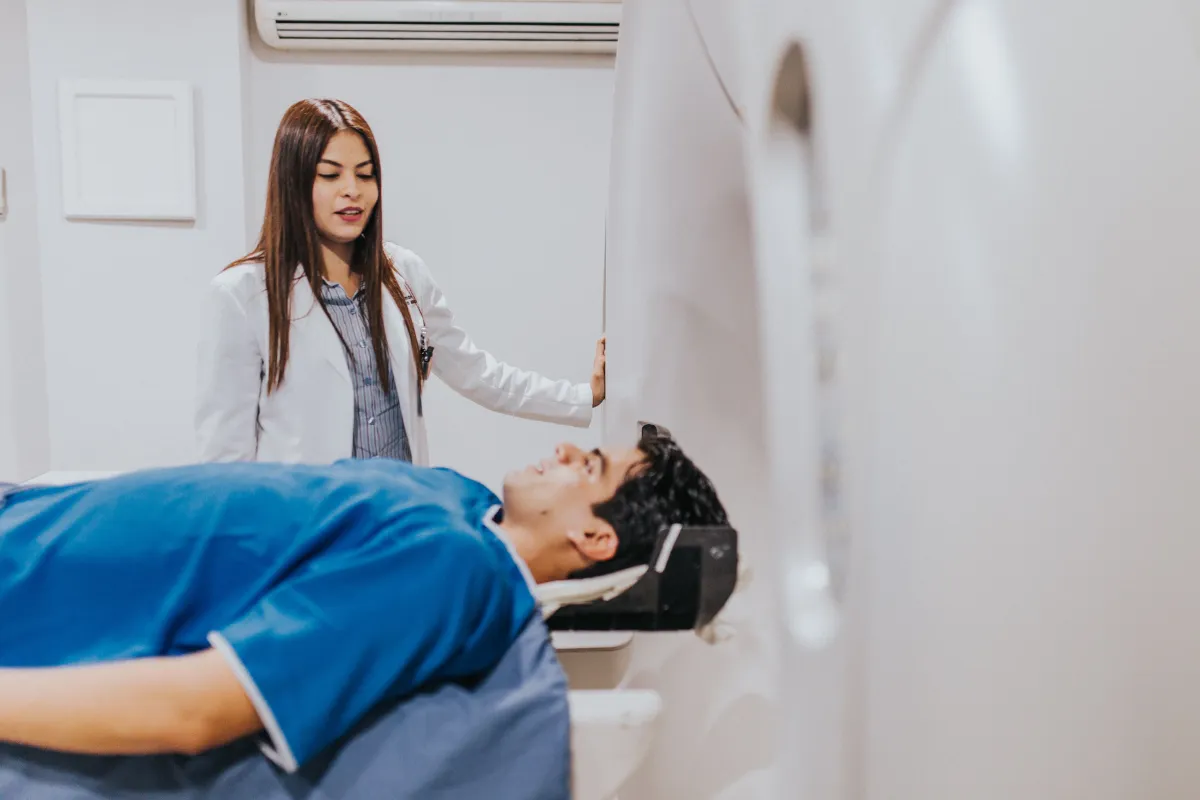
- The scan takes 30 to 45 minutes. You will lie on your back on the scanner table.
- Gadolinium contrast will be injected through a small cannula in your arm during the scan. This is part of the standard mpMRI protocol.
The scan itself is painless. The loudest part is the noise from the scanner, and you will be given headphones or earplugs.
Prostate Cancer: Key Statistics for UK Men
Prostate cancer is the most common cancer in men in the UK. Understanding the numbers helps put the importance of early detection into context.
- Over 52,000 men are diagnosed with prostate cancer each year in the UK (Cancer Research UK).
- 1 in 8 men in the UK will be diagnosed with prostate cancer during their lifetime.
- Risk increases with age: 75% of diagnoses are in men over 65.
- Black men have 1 in 4 lifetime risk, roughly double that of white men.
- Men with a first-degree relative with prostate cancer have 2 to 3 times the average risk.
- 5-year survival for prostate cancer detected at stage 1 or 2 is over 95%.
- When detected late (stage 4), 5-year survival drops to approximately 50%.
Early detection through mpMRI and targeted biopsy has transformed prostate cancer diagnosis. The PROMIS trial demonstrated that mpMRI before biopsy reduces over-diagnosis of clinically insignificant cancers by 5% while detecting 18% more clinically significant cancers compared to standard systematic biopsy.
Prostate MRI vs Biopsy vs PSA Test
These three investigations play different roles in prostate cancer assessment. They are complementary, not interchangeable.
| Investigation | What It Does | Limitations |
|---|---|---|
| PSA blood test | Measures a protein produced by the prostate. Raised levels may suggest cancer, infection, or enlargement. | Not cancer-specific. Can be raised by BPH, prostatitis, cycling, or UTI. High false-positive rate. |
| Prostate mpMRI | Produces detailed images of the prostate. Detects suspicious areas with ~90% sensitivity for significant cancer. | Cannot confirm cancer. Some cancers (especially low-grade) may not be visible. Requires experienced radiologist. |
| Prostate biopsy | Takes tissue samples for microscopic examination. Provides definitive cancer diagnosis and Gleason grading. | Invasive. Risk of infection, bleeding, pain. Can miss cancers if not targeted. mpMRI before biopsy improves accuracy. |
The current NICE-recommended pathway is: raised PSA or abnormal examination, then mpMRI, then targeted biopsy only if the MRI shows suspicious areas (PI-RADS 3-5). This approach reduces unnecessary biopsies and improves the detection of clinically significant cancers.
Where to Get a Prostate MRI in Kent
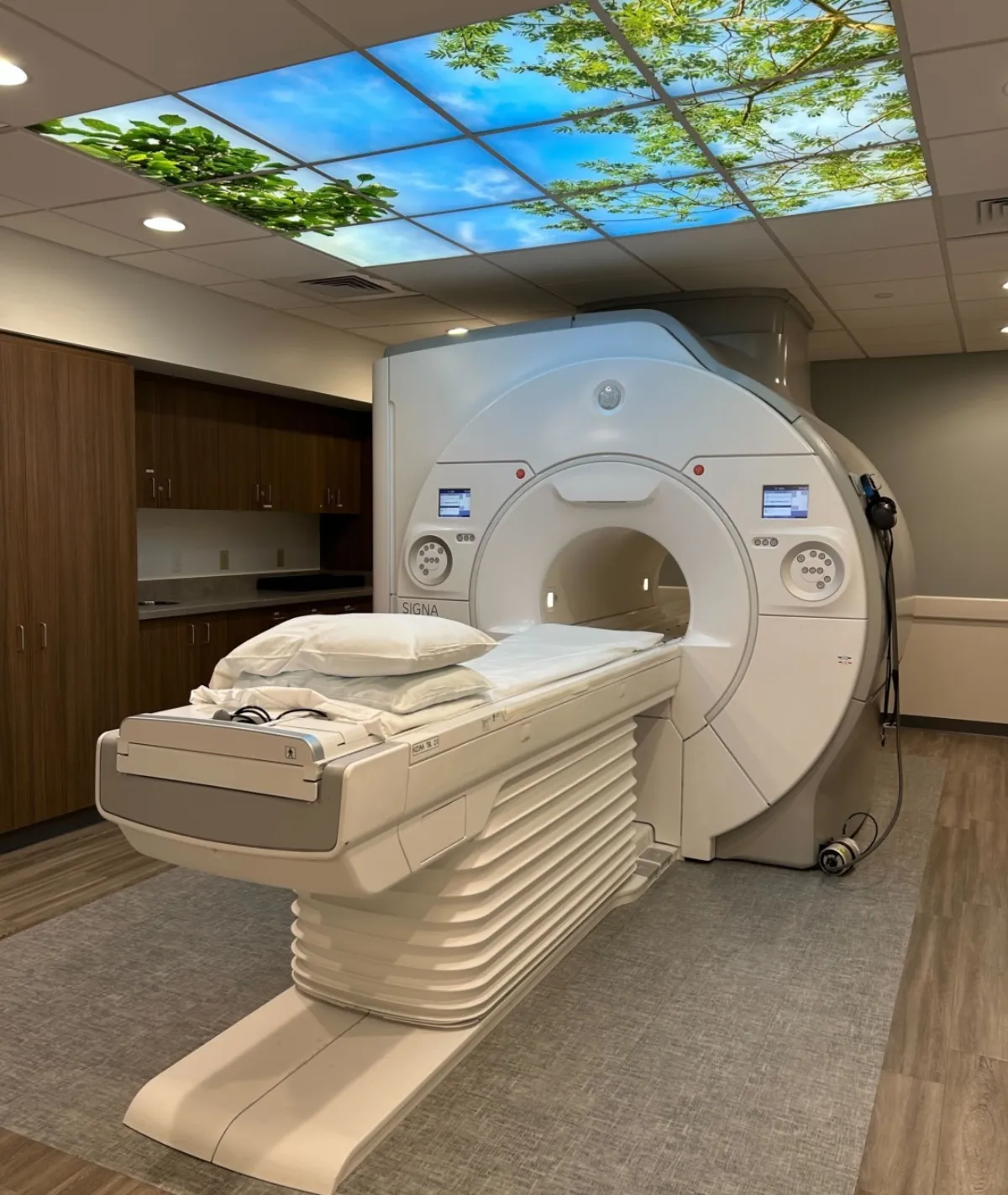
Mira offers prostate mpMRI at Mira Scanning Centre, Bluewater Shopping Centre, Dartford, Kent (DA9 9ST). The centre uses clinical-grade MRI equipment and scans are interpreted by consultant radiologists experienced in prostate imaging.
The centre is accessible from Dartford, Gravesend, Bromley, Bexley, Medway, south-east London, and Maidstone. Free parking is available at Bluewater. The centre operates Monday to Saturday, 8am to 9pm, and Sunday, 10am to 5pm.
Book your prostate MRI online in under 2 minutes. No GP referral is needed. If you have recent PSA results, you can share them with our team but they are not required to book.
What to Do With Your Prostate MRI Results
Once you receive your two reports from Mira, the next step depends on the findings.
- PI-RADS 1-2 (no suspicious findings): Share your results with your GP for their records. Discuss ongoing PSA monitoring if appropriate. No biopsy is typically needed.
- PI-RADS 3 (equivocal finding): Take your results to your GP and request a urology referral to discuss whether biopsy is appropriate. Your MRI results will fast-track the NHS pathway because the imaging is already done.
- PI-RADS 4-5 (suspicious finding): See your GP promptly. A urology referral for targeted biopsy will be recommended. Having your MRI results already available speeds up the NHS diagnostic pathway significantly.
- Benign findings (BPH, cyst, calcification): Your miraclarity report will explain these in plain English. Many prostate findings are benign and do not require treatment, though your GP may want to monitor them.
Having a private prostate MRI does not prevent you from using the NHS for any further investigation or treatment. Your MRI results can be integrated into the NHS pathway, potentially saving weeks of waiting.
Get Answers About Your Prostate Health
Private prostate mpMRI from £499. Self-referral accepted. Two reports - one for your doctor, one for you. Results in 3 working days.
Book Prostate MRIFrequently asked questions
How much does a prostate MRI cost in the UK?
A private prostate mpMRI costs from £499 with Mira at the Kent scanning centre. London prices typically range from £700 to £1,100. All Mira prices include the scan, consultant radiologist interpretation, and two reports.
Do I need a GP referral for a prostate MRI?
No. Mira accepts self-referrals for prostate MRI. You can book online without a GP letter, PSA result, or consultant referral. However, if you have red flag symptoms (blood in urine, severe urinary retention), you should see your GP urgently.
How long does a prostate MRI take?
A prostate mpMRI scan takes approximately 30 to 45 minutes. You lie on your back on the scanner table. Contrast is injected during the scan through a cannula in your arm.
Is a prostate MRI painful?
No. The scan itself is painless. Some patients feel a cool sensation or metallic taste when gadolinium contrast is injected. The scanner is noisy, but you will be given headphones or earplugs.
Can a prostate MRI detect cancer?
Prostate mpMRI has a sensitivity of approximately 90% for detecting clinically significant prostate cancer. It cannot definitively confirm cancer (only biopsy can do that), but it identifies suspicious areas that should be biopsied and, equally importantly, identifies men who do not need biopsy.
What is the difference between mpMRI and a standard MRI?
Multiparametric MRI (mpMRI) combines three imaging sequences: T2-weighted, diffusion-weighted, and dynamic contrast-enhanced. A standard MRI uses only one or two sequences. mpMRI provides significantly more diagnostic information and is the recommended technique for prostate assessment.
What does PI-RADS mean?
PI-RADS (Prostate Imaging Reporting and Data System) is a standardised scoring system for prostate MRI. Scores range from 1 (cancer highly unlikely) to 5 (cancer highly likely). Scores of 1-2 typically mean no biopsy is needed. Scores of 4-5 usually lead to a biopsy recommendation.
How long do prostate MRI results take?
With Mira, you receive two reports within 3 working days: a medical report and a miraclarity report in plain English. Through the NHS, results may take 2 to 4 weeks and are communicated through your urologist rather than directly to you.
Can I eat before a prostate MRI?
Yes. You do not need to fast for a prostate MRI. The main preparation requirement is avoiding ejaculation for at least 72 hours before the scan, as this affects image quality. You should also have a moderately full bladder at the time of scanning.
At what age should I consider a prostate MRI?
Prostate cancer risk increases with age and is most commonly diagnosed in men over 50. Men with a family history of prostate cancer or Black men (who have higher risk) may want to discuss prostate assessment with their GP from age 45. There is no formal screening programme in the UK, so proactive self-referral is an option.
Final thoughts
Prostate cancer is the most common cancer in UK men, and early detection through mpMRI significantly improves outcomes. A private prostate MRI from £499 gives you a detailed assessment of your prostate without waiting weeks or months in the NHS pathway.
With Mira, you can self-refer, book online in under 2 minutes, and receive two reports within 3 working days. The miraclarity report explains your PI-RADS score and findings in plain language, so you understand your results before you see your GP or urologist. Book your prostate MRI in Kent and take control of your prostate health.