Knee MRI Cost in Houston (2026)
Key takeaways
- A knee MRI in Houston costs from $369 with Mira Diagnostics. Hospital-based knee MRIs can cost $1,200 to $3,500.
- Mira operates three scanning centres across Houston: Central (Richmond Ave), Spring (Walters Rd), and Dickinson (Clear Lake).
- A knee MRI detects ACL tears, meniscus damage, cartilage loss, ligament injuries, and early osteoarthritis.
- Every Mira scan includes two reports: a medical report for your doctor and a miraclarity report that explains findings in plain English.
- Results are delivered within 48 hours of your scan.
- No referral is needed to book, though you will need to upload a doctor order after booking.
- Cash pay pricing through Mira is transparent and upfront. No hidden facility fees or surprise bills.
If you need a knee MRI in Houston, cost matters. Hospital outpatient departments charge $1,200 to $3,500 for the same scan you can get at a freestanding imaging centre for a fraction of the price. Mira Diagnostics offers knee MRI from $369 at three scanning centres across Houston, with transparent cash pay pricing, two reports included, and results delivered within 48 hours.
Knee MRI Cost in Houston: Price Comparison
The cost of a knee MRI in Houston depends almost entirely on where you go. The scan itself is the same regardless of the facility, but the pricing model is dramatically different between hospitals and freestanding centres.
| Facility Type | Typical Price | Notes |
|---|---|---|
| Mira Diagnostics | From $369 | Cash pay, two reports included |
| Freestanding imaging centres | $400 - $800 | Cash pay rates |
| Urgent care with MRI | $500 - $1,000 | Limited availability |
| Hospital outpatient | $1,200 - $3,500 | Facility fees apply |
| Emergency room MRI | $2,000 - $5,000+ | Emergency department surcharges |
The price difference between a freestanding centre and a hospital for the same knee MRI can exceed $2,000. The scan technology, image quality, and radiologist qualifications are equivalent. The cost premium at hospitals is driven by facility fees, administrative overhead, and insurance billing structures.
What Does a Knee MRI Show?
A knee MRI is the most detailed imaging study available for the knee joint. It produces high-resolution images of every structure inside and around the knee, including structures that X-ray and ultrasound cannot visualise.
Conditions Detected on Knee MRI
- ACL tears: Complete or partial ruptures of the anterior cruciate ligament, the most commonly injured knee ligament in sports
- Meniscus tears: Damage to the medial or lateral meniscal cartilage from acute injury or chronic wear
- MCL and LCL injuries: Medial and lateral collateral ligament sprains or tears from direct impact or twisting
- Cartilage damage: Chondral defects, thinning, or loss of the smooth cartilage covering the bone surfaces
- Osteoarthritis: Joint narrowing, bone spurs, bone marrow changes, and cartilage loss
- Baker cyst: A fluid-filled sac behind the knee, often secondary to other knee pathology
- Bone bruising: Microfractures within the bone not visible on X-ray
- Patellar tracking problems: Malalignment or instability of the kneecap
- Tendon injuries: Patellar tendinopathy, quadriceps tendon tears
- Stress fractures: Early fractures from repetitive loading, often in runners
According to the American College of Radiology, MRI is the imaging study of choice for internal derangement of the knee, with sensitivity above 90% for both meniscal and ligament tears.
When Do You Need a Knee MRI?
A knee MRI is appropriate when clinical examination suggests an internal structural problem that cannot be fully evaluated with X-ray alone.
- Acute injury with swelling, instability, or mechanical locking
- A "pop" felt during a pivoting or twisting movement (classic ACL tear mechanism)
- Persistent knee pain lasting more than 4 to 6 weeks despite rest and conservative treatment
- Knee giving way or feeling unstable when walking, climbing stairs, or playing sports
- Catching or locking sensations suggesting a loose body or meniscal tear
- Pre-surgical planning when an orthopaedic surgeon needs to map the damage
- Monitoring after previous knee surgery such as ACL reconstruction
- Unexplained knee effusion (swelling) without a clear mechanism of injury
If your doctor suspects a fracture, they may order an X-ray first. But X-rays cannot show ligaments, menisci, or cartilage. If the X-ray is negative and your symptoms persist, MRI is the logical next step.
Where to Get a Knee MRI in Houston with Mira
Mira operates three scanning centres across the Houston metro area. Each location has different scanner types to accommodate different patient needs.
| Location | Address | Scanner Type | Weight Limit |
|---|---|---|---|
| Central Houston | 6300 Richmond Ave, Ste 104, Houston 77057 | 1.5T Closed MRI | 275 lbs |
| Spring | 14405 Walters Rd, Ste A, Houston 77014 | Open MRI + High-Field | 350 lbs |
| Dickinson (Clear Lake) | Clear Lake area | 3T | 375 lbs |
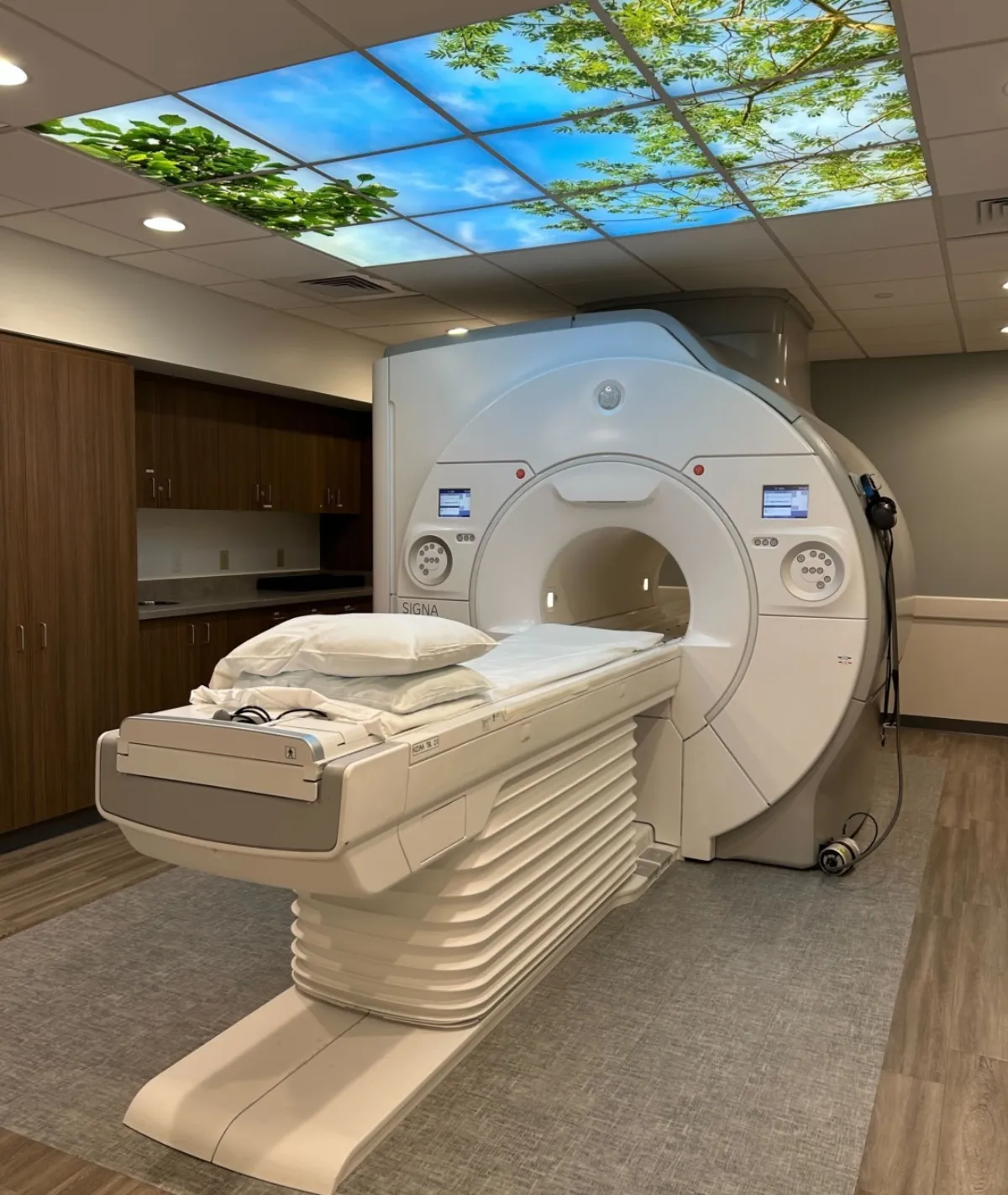
All three locations offer knee MRI. If you have claustrophobia concerns, the Spring location offers an open scanner with more room than a traditional closed bore.
Appointments are available Monday to Friday, 8:30am to 5pm, and Saturday, 8:30am to 2pm. You select a 3-hour time window when booking, and your exact appointment time is confirmed within 30 minutes.
Book Your Knee MRI in Houston
Cash pay knee MRI from $369 at three Houston locations. Two reports included. Results in 48 hours.
Book Knee MRIKnee MRI Cost: Insurance vs Cash Pay in Houston
Many Houston patients assume insurance will make their knee MRI cheaper. The reality is more complicated.
- With insurance at a hospital: Your insurance is billed $2,000 to $4,000. After applying your deductible and coinsurance, you may owe $500 to $2,000 out of pocket.
- With insurance at an imaging centre: The billed rate is lower ($600 to $1,200), but you still face deductible and coinsurance obligations.
- Cash pay with Mira: $369, paid upfront at booking. No deductible, no coinsurance, no surprise bills.
If you have a high-deductible health plan (HDHP) with a $3,000 or $5,000 deductible, you will likely pay the full billed amount for a knee MRI until your deductible is met. In that case, Mira cash pay at $369 is almost certainly cheaper than using insurance.
Mira pricing is transparent. No insurance paperwork, no pre-authorization calls, no claim denials. You see the price, you pay the price, you get your scan and two reports.
How to Prepare for a Knee MRI
Knee MRI preparation is straightforward. No fasting is required, and there are no medication changes needed for a standard knee scan.
- Wear comfortable clothing without metal. Athletic shorts or sweatpants are ideal.
- Remove all metal items: watches, jewellery, belts, hair clips, and piercings.
- Tell the radiographer about any metal implants, surgical hardware, pacemakers, or other implanted devices.
- Arrive 15 minutes early to complete safety screening paperwork.
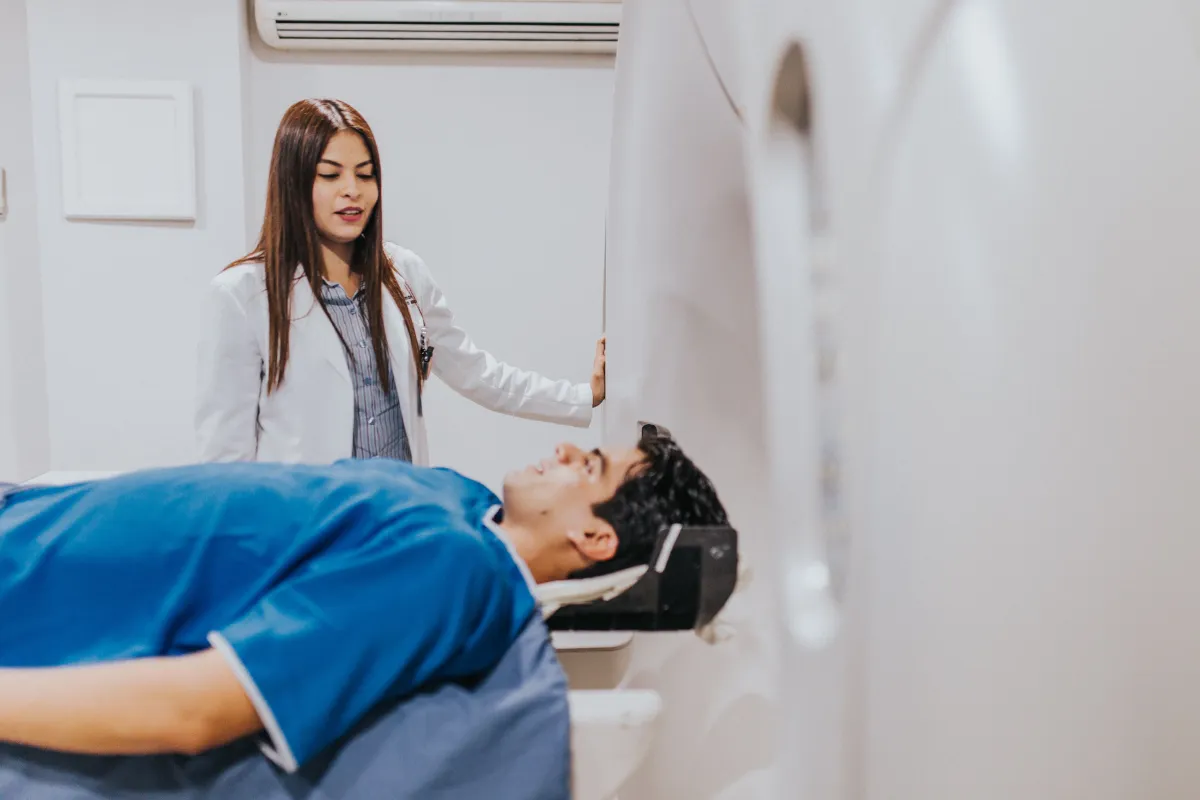
- The scan takes 25 to 40 minutes. You lie on a table with your knee positioned in a dedicated coil.
- The scanner is loud. You will receive headphones or earplugs.
- Keep still during the scan. Movement blurs the images and may require sequences to be repeated.
Most of your body remains outside the scanner during a knee MRI. If you have claustrophobia, this is typically one of the easier MRI scans to tolerate. Mira Scanning Center, Walters Road (Spring) also offers an open scanner.
Knee MRI for Sports Injuries in Houston
Houston is home to a massive recreational and competitive sports community. Football, soccer, basketball, running, CrossFit, and martial arts all put significant stress on the knee joint. ACL tears alone affect roughly 200,000 Americans per year according to the American Academy of Orthopaedic Surgeons.
Getting an MRI quickly after a knee injury matters. Studies show that early MRI (within 2 weeks of injury) improves diagnostic accuracy and helps orthopaedic surgeons plan treatment more effectively. Waiting months for imaging can allow secondary damage to develop, such as meniscal tears that occur when an ACL-deficient knee is used during activity.
Mira makes it possible to get a knee MRI in Houston within days of injury, so you can start the right treatment sooner rather than waiting for insurance pre-authorization or referral delays.
Understanding Your Knee MRI Results
Knee MRI reports use medical terminology that can be confusing. Terms like "grade 2 signal in the posterior horn of the medial meniscus" or "partial-thickness chondral fissuring of the lateral femoral condyle" are precise but not immediately helpful for patients.
With Mira, you receive two reports within 48 hours. The medical report provides the full clinical findings for your doctor. The miraclarity report translates each finding into plain English. For example, "grade 2 meniscal signal" becomes "early wear in the inner cartilage pad of your knee. This is common in adults over 30 and does not represent a tear." Visual body guides show the exact location, and severity indicators tell you whether each finding is normal, something to monitor, or something needing attention.
What Happens After Your Knee MRI
After the scan, you can drive, return to work, and continue normal activities immediately. There is no recovery time. If contrast was used (uncommon for knee MRI), drink extra water afterwards.
Once you receive your reports, the next step depends on the findings. Minor conditions like small Baker cysts or age-related cartilage changes may not require treatment. ACL tears, significant meniscal tears, or advanced cartilage damage will likely require an orthopaedic consultation.
You can take both Mira reports to any physician, orthopaedic surgeon, or sports medicine specialist. The medical report provides the clinical detail they need, and the miraclarity report ensures you understand what was found before your appointment.
Knee MRI vs Knee X-ray: Which Do You Need?
Many patients arrive at a knee MRI after an X-ray showed nothing conclusive. This is because X-ray and MRI look at completely different structures.
- X-ray shows bones: Fractures, bone alignment, joint space narrowing (indirect sign of cartilage loss), and bone spurs.
- MRI shows everything else: Ligaments, menisci, cartilage surfaces, tendons, bone marrow, fluid, and muscle. These structures are invisible on X-ray.
- If your symptoms suggest a soft tissue injury (twisting mechanism, instability, locking), MRI is the appropriate test. A normal X-ray does not rule out a ligament or meniscal tear.
- If fracture is the primary concern (direct trauma, inability to bear weight), X-ray is the appropriate first test.
Going directly to MRI can save time and money when the clinical picture points to a soft tissue problem. Mira offers knee MRI from $369, and you can skip the X-ray step if your symptoms suggest an internal joint problem rather than a fracture.
Get Answers About Your Knee Pain
Cash pay knee MRI from $369 in Houston. No insurance needed. Two reports - one for your doctor, one for you. Results in 48 hours.
Book Your Knee MRIFrequently asked questions
How much does a knee MRI cost in Houston?
A knee MRI in Houston costs from $369 with Mira Diagnostics (cash pay). Hospital-based knee MRIs cost $1,200 to $3,500. Freestanding imaging centres charge $400 to $800. Mira pricing includes two reports.
Do I need a referral for a knee MRI in Houston?
You do not need a referral to book through Mira. However, Texas regulations require a doctor order for MRI. You can upload this after booking. Your primary care physician or orthopaedic surgeon can provide the order.
How long does a knee MRI take?
A knee MRI takes approximately 25 to 40 minutes. You lie on a table with your knee in a dedicated coil, and the table slides into the scanner. Most of your body stays outside the machine.
Is a knee MRI painful?
No. A knee MRI is completely painless. The scanner does not touch you. The main thing you will notice is the loud knocking and buzzing from the scanner. You will be given headphones or earplugs.
How quickly can I get a knee MRI in Houston?
With Mira, appointments are often available within the same week. You select a 3-hour time window when booking, and your exact time is confirmed within 30 minutes.
Can a knee MRI detect a torn meniscus?
Yes. MRI is the gold standard for diagnosing meniscal tears, with sensitivity above 90%. It can distinguish between partial and complete tears, and identify the exact location and extent of the damage.
Do I need an X-ray before a knee MRI?
Not necessarily. While X-ray is useful for detecting fractures and arthritis, it cannot show soft tissue injuries. If your symptoms suggest a ligament or meniscal injury, going directly to MRI is appropriate and can save time.
How long do knee MRI results take?
Mira delivers two reports within 48 hours: a medical report and a miraclarity report in plain English. Hospital-based results may take 1 to 2 weeks depending on the facility and your physician schedule.
Can I use my insurance for a knee MRI at Mira?
Mira operates on a cash pay model. At $369 per scan, cash pay is often cheaper than using insurance when you factor in deductibles, coinsurance, and facility fees. No insurance paperwork is required.
Which Mira location in Houston is best for a knee MRI?
All three Mira Houston locations offer knee MRI. Richmond Ave has a closed 1.5T scanner. Spring (Walters Rd) has open and high-field options with a 350 lbs limit. Dickinson has a 3T scanner with a 375 lbs limit.
Final thoughts
A knee MRI is the most accurate way to find out what is causing your knee pain, and you do not need to pay hospital prices to get one. Mira offers knee MRI in Houston from $369 at three Houston scanning centres, with cash pay pricing that includes two reports and no hidden fees.
Results are delivered within 48 hours, including a miraclarity report that explains your findings in plain English. Book your knee MRI online and get the answers you need to start the right treatment.
Book Your Knee MRI in Houston
Two reports. No referral needed. Results in 3 working days.
Book your scan