Back Pain and Spine MRI: A UK Guide
Key takeaways
- A private lumbar spine MRI in the UK costs from £369 with Mira. Whole spine MRI (cervical, thoracic, and lumbar) starts from £750.
- Most back pain resolves within 6 to 12 weeks without imaging. MRI is recommended when pain is severe, persistent, or accompanied by neurological symptoms.
- Spine MRI can detect disc herniations, spinal stenosis, nerve compression, vertebral fractures, tumours, and infections.
- The NHS pathway for spine MRI typically takes 10 to 20 weeks from GP visit to results. With Mira, the process takes 2 to 7 days.
- No GP referral is required to book a private spine MRI through Mira. Self-referral is accepted.
- Every Mira scan includes two reports: a medical report for your GP and a miraclarity report that explains findings in plain English.
- Results are delivered within 3 working days of your scan.
- Red flag symptoms such as loss of bladder control, progressive leg weakness, or severe night pain warrant urgent medical attention rather than routine private imaging.
Back pain is one of the most common reasons people seek a lumbar spine MRI in the UK. If your pain has persisted for more than 6 weeks, radiates into your legs, or is accompanied by numbness or weakness, an MRI can reveal what is causing it. A private spine MRI with Mira Diagnostics starts from £369 at our accredited scanning centre in Kent (Bluewater, Dartford), with no GP referral needed and results delivered within 3 working days.
Lumbar Spine MRI Cost in the UK
The cost of a private spine MRI depends on how many regions of the spine are scanned. The spine is divided into three sections: cervical (neck), thoracic (mid-back), and lumbar (lower back). A single-region scan costs less than a whole spine study.
| Scan Type | Mira Price | Other UK Providers | London Average |
|---|---|---|---|
| Lumbar spine MRI | From £369 | £400 - £650 | £500 - £800 |
| Cervical spine MRI | From £369 | £400 - £650 | £500 - £800 |
| Thoracic spine MRI | From £369 | £400 - £650 | £500 - £800 |
| Whole spine MRI (all 3 regions) | From £750 | £700 - £1,100 | £900 - £1,400 |
| Spine MRI with contrast | From £485 | £550 - £850 | £650 - £1,000 |
All Mira prices include the scan, consultant radiologist interpretation, and two reports. There are no additional charges for the report, images, or booking.
When Does Back Pain Need an MRI?
Back pain is extremely common. According to the NHS, lower back pain affects around one-third of the UK adult population each year. The good news is that the vast majority of back pain is mechanical and resolves within 6 to 12 weeks with conservative treatment such as staying active, physiotherapy, and pain management.
Clinical guidelines from the National Institute for Health and Care Excellence (NICE) recommend against routine imaging for non-specific lower back pain. However, MRI is appropriate and recommended when certain clinical features are present.
When MRI Is Recommended
- Back pain with sciatica (pain radiating down one or both legs) that has persisted for more than 6 weeks despite treatment
- Progressive neurological symptoms such as increasing leg weakness, numbness, or difficulty with balance
- Suspected cauda equina syndrome: sudden onset of saddle area numbness, loss of bladder or bowel control, bilateral leg weakness (this is a medical emergency - go to A&E)
- History of cancer with new back pain (to exclude spinal metastases)
- Suspected spinal infection: fever, night sweats, and escalating back pain
- Vertebral compression fracture suspected in patients with osteoporosis or after trauma
- Back pain in patients under 20 or over 55 with features suggesting a non-mechanical cause
- Pre-surgical assessment when a spinal procedure is being planned
Red flag warning: If you experience sudden loss of bladder or bowel control, numbness in the saddle area (between your legs), or rapidly progressive leg weakness, go to A&E immediately. These symptoms may indicate cauda equina syndrome, which requires emergency treatment.
What Does a Spine MRI Show?
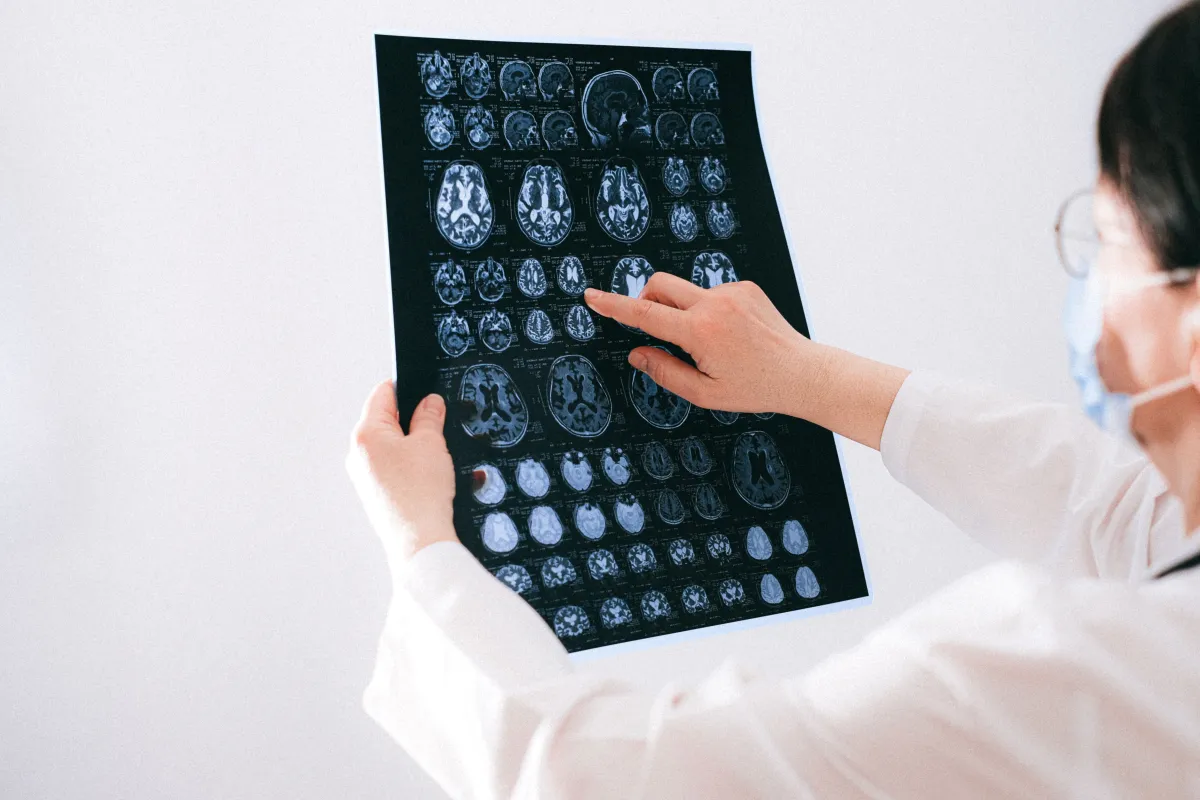
A spine MRI produces detailed images of the vertebrae, intervertebral discs, spinal cord, nerve roots, and surrounding soft tissues. It is the single most informative imaging test for the spine.
Common Findings on Lumbar Spine MRI
- Disc herniation (slipped disc): A disc bulges or ruptures, potentially compressing a nearby nerve root. This is the most common cause of sciatica.
- Disc degeneration: Wear and tear of the discs causing them to lose height and hydration. Seen on MRI as dark discs (loss of normal bright signal).
- Spinal stenosis: Narrowing of the spinal canal or nerve exit channels, often from a combination of disc bulging, ligament thickening, and facet joint enlargement.
- Spondylolisthesis: One vertebra slipping forward on the one below it, which can compress nerves.
- Facet joint arthropathy: Degeneration of the small joints at the back of the spine.
- Nerve root compression: Pinching of a nerve as it exits the spinal canal, causing pain, numbness, or weakness in a specific leg area.
- Vertebral fractures: Compression fractures from osteoporosis or trauma.
- Tumours: Primary spinal tumours or metastases from cancers elsewhere.
- Infections: Discitis (disc infection) or vertebral osteomyelitis.
- Inflammatory conditions: Ankylosing spondylitis, sacroiliitis.
One important note: disc changes on MRI are common in people without any back pain. Studies published in the American Journal of Neuroradiology have shown that 30% of 20-year-olds and over 80% of 50-year-olds have disc bulges visible on MRI, even when they have no symptoms. This is why MRI findings must always be interpreted alongside your clinical symptoms.
Spine MRI vs X-ray vs CT Scan
Three imaging modalities are commonly used for back pain. Each has different strengths depending on what is being investigated.
| Feature | MRI | X-ray | CT Scan |
|---|---|---|---|
| Disc detail | Excellent | Not visible | Moderate |
| Nerve visibility | Excellent | Not visible | Moderate |
| Spinal cord | Excellent | Not visible | Limited |
| Bone fractures | Good | Good | Excellent |
| Bone alignment | Good | Good | Excellent |
| Soft tissue detail | Excellent | None | Moderate |
| Radiation exposure | None | Low | Moderate |
| Scan duration | 25 - 45 minutes | 5 minutes | 10 - 15 minutes |
| Private cost | From £369 | £80 - £150 | £300 - £600 |
MRI is the preferred investigation for most spine problems because it provides superior soft tissue contrast without radiation. CT is better for complex fractures and bone detail, while X-ray is useful as a first-line assessment for alignment and obvious fractures.
Book Your Spine MRI
Private spine MRI from £369 in Kent. No GP referral needed. Two reports included. Results in 3 working days.
Book Spine MRINHS Spine MRI Waiting Times vs Private
The NHS pathway for a spine MRI involves multiple steps, each with its own waiting period. For non-urgent back pain, the total time from first GP appointment to receiving results can stretch to 4 to 5 months.
| Step | NHS Timeline | Mira (Private) |
|---|---|---|
| GP appointment | 1 - 3 weeks | Not needed (self-referral) |
| Initial conservative treatment | 6 - 12 weeks (if GP advises waiting) | Not required |
| MRI referral to scan | 4 - 10 weeks | Same week availability |
| Scan to results | 2 - 4 weeks | 3 working days |
| Total: first concern to results | 13 - 29 weeks | 2 - 7 days |
NICE guidelines recommend that GPs should not refer for imaging within the first 6 weeks unless red flag symptoms are present. This means many patients spend weeks in pain before imaging is even considered. A private spine MRI allows you to get answers sooner, particularly if your pain is affecting your ability to work, sleep, or carry out daily activities.
How to Prepare for a Spine MRI
Spine MRI preparation is minimal. You do not need to fast or change your medication in most cases.
- Wear comfortable clothing without metal zips, buttons, or fasteners. You may be given a gown.
- Remove all metal items: watches, jewellery, belt buckles, coins, credit cards, and hair clips.
- Inform the radiographer about any metal implants, pacemakers, or implanted devices before the scan.
- Let the team know if you have kidney problems, as this may affect whether contrast can be used safely.
- Arrive 10 to 15 minutes early to complete the MRI safety questionnaire.
- The scan takes 25 to 45 minutes depending on how many spine regions are being scanned.
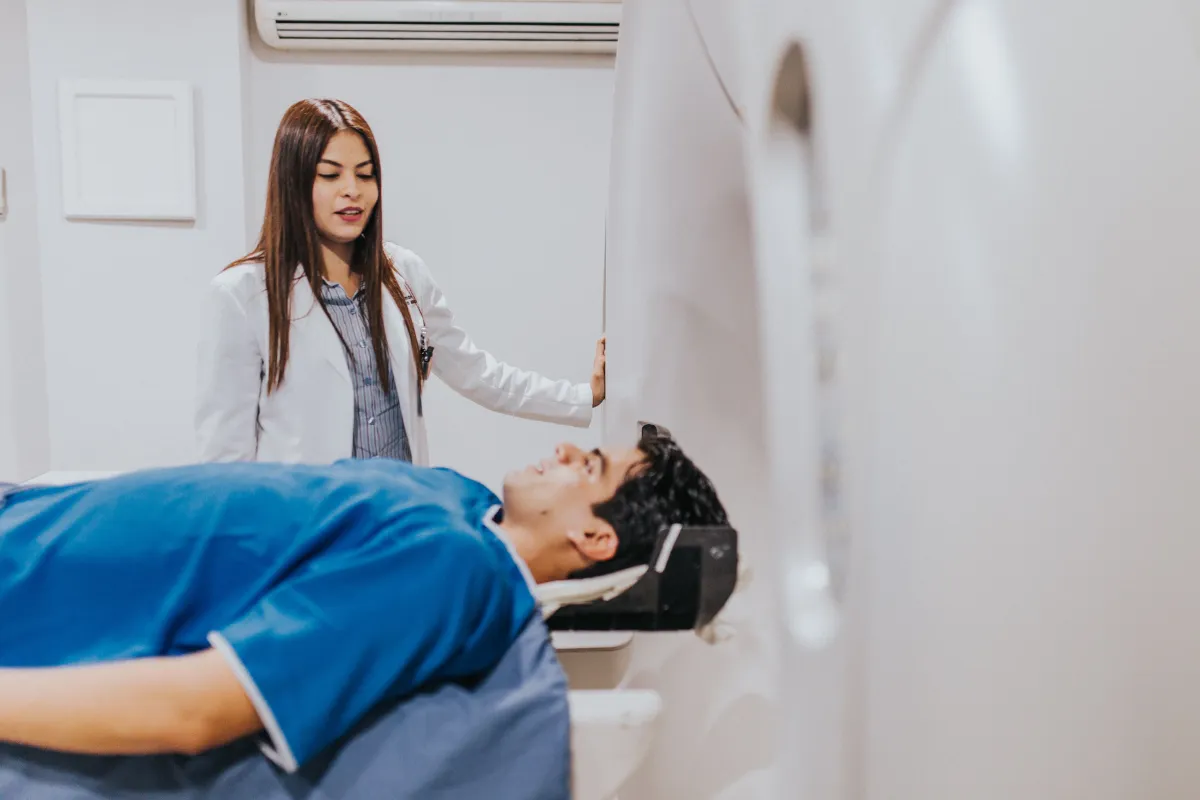
- You will lie flat on your back on the scanner table. Try to stay as still as possible during the scan.
If you are anxious about enclosed spaces, tell the team when you book. The radiographer can talk you through the process and use strategies to help you feel comfortable. For a spine MRI, you lie with your head near the opening of the scanner, which many patients find more manageable than head-first scans.
Understanding Your Spine MRI Results
Spine MRI reports use specific medical terminology that can be difficult to interpret. Terms like "broad-based disc protrusion at L4/L5 causing moderate bilateral neural foraminal narrowing" are clinically precise but not immediately helpful when you are trying to understand what is wrong with your back.
With Mira, you receive two reports. The medical report contains the full clinical findings for your GP or specialist. The miraclarity report explains each finding in plain English. For example, "L4/L5 disc protrusion" becomes "a disc in your lower back is bulging and pressing on the nerves that exit the spine at this level. This can cause pain, tingling, or numbness in your leg." Visual body guides show the exact location, and severity indicators help you understand which findings need attention.
Both reports are delivered within 3 working days. You can share them directly with your GP, physiotherapist, osteopath, or spinal surgeon.
Treatment Options After a Spine MRI
What happens after your spine MRI depends on the findings. Most spinal conditions do not require surgery.
- Disc herniation: 85% to 90% of disc herniations improve with conservative treatment (physiotherapy, pain management, activity modification) within 6 to 12 weeks, according to the NHS.
- Spinal stenosis: Mild to moderate stenosis is managed with physiotherapy and pain relief. Severe stenosis with significant neurological compromise may require surgical decompression.
- Degenerative disc disease: Managed with exercise, core strengthening, weight management, and pain relief. Surgery is rarely needed.
- Spondylolisthesis: Most cases are managed conservatively. Surgery is considered when there is progressive slippage or neurological deficit.
- Nerve root compression: Epidural steroid injections may provide relief. Surgery (microdiscectomy) is considered if symptoms do not improve after 6 to 12 weeks.
Having your MRI results early means you can start targeted treatment sooner rather than waiting months in the dark about what is causing your pain.
Where to Get a Spine MRI in Kent
Mira scans in Kent take place at Mira Scanning Centre, Bluewater Shopping Centre, Dartford, Kent (DA9 9ST), which offers lumbar, cervical, thoracic, and whole spine MRI scans. The centre is accessible from Dartford, Gravesend, Bromley, Bexley, Medway, south-east London, and Maidstone.
Appointments are available Monday to Saturday, 8am to 9pm, and Sunday, 10am to 5pm. Evening and Saturday slots are available for patients who work during the week. Free parking is available at Bluewater.
Book your spine MRI online in under 2 minutes. No GP referral needed.
Spine MRI With and Without Contrast
Most routine spine MRI scans do not require gadolinium contrast. A standard non-contrast scan is sufficient for evaluating disc herniations, stenosis, degenerative changes, and nerve compression.
- Without contrast: Adequate for most disc problems, degenerative conditions, and mechanical back pain investigations. This is the standard protocol for lower back pain.
- With contrast: Recommended when the clinical question involves suspected infection (discitis), tumour, post-surgical assessment, or inflammatory conditions. Contrast highlights areas of abnormal blood vessel activity.
- Contrast cost: Spine MRI with contrast starts from £485 with Mira, compared to £550 to £850 at other Kent providers.
Your clinician or the radiologist will determine whether contrast is needed based on your symptoms and clinical history. If you are booking without a referral, the scanning team will advise at the time of booking.
Get Answers About Your Back Pain
Private spine MRI from £369 in Kent. Self-referral accepted. Two reports included. Results in 3 working days.
Book Spine MRIFrequently asked questions
How much does a lumbar spine MRI cost in the UK?
A private lumbar spine MRI costs from £369 with Mira at the Kent scanning centre. Other UK providers charge between £400 and £650. London prices range from £500 to £800. Whole spine MRI (cervical, thoracic, and lumbar) starts from £750.
Do I need a GP referral for a spine MRI?
No. Mira accepts self-referrals for all spine MRI scans. You can book online without a GP letter. If you have red flag symptoms such as loss of bladder control or progressive leg weakness, you should see a doctor urgently rather than booking a private scan.
How long does a spine MRI take?
A single-region spine MRI (lumbar only or cervical only) takes approximately 25 to 35 minutes. A whole spine MRI covering all three regions takes 40 to 60 minutes.
Can an MRI show the cause of my back pain?
MRI can identify disc herniations, spinal stenosis, nerve compression, fractures, infections, and tumours. However, many MRI findings are common in people without pain, so results must be interpreted alongside your symptoms. Your miraclarity report helps explain which findings are clinically significant.
Is a spine MRI painful?
No. A spine MRI is painless. You lie still on a table that slides into the scanner. The main discomfort is lying flat for 25 to 45 minutes, which can be uncomfortable if you have acute back pain. Tell the radiographer if you need extra support or a brief break.
Should I get an MRI if my back pain just started?
For most new-onset back pain without red flag symptoms, guidelines recommend waiting 6 weeks before imaging, as most back pain resolves with conservative treatment. However, if your pain is severe, radiating into your legs, or accompanied by numbness or weakness, earlier imaging may be appropriate.
What is the difference between a lumbar MRI and a whole spine MRI?
A lumbar MRI covers only the lower back (typically L1 to S1). A whole spine MRI covers the cervical (neck), thoracic (mid-back), and lumbar (lower back) regions in a single session. Your doctor may recommend whole spine if symptoms affect multiple areas or if a systemic condition like metastatic disease is suspected.
How long do spine MRI results take?
Mira delivers two reports within 3 working days: a medical report and a miraclarity report in plain English. NHS spine MRI results typically take 2 to 4 weeks and are sent to your GP rather than directly to you.
Can I drive after a spine MRI?
Yes. A standard spine MRI does not affect your ability to drive. You can return to normal activities immediately after the scan. If contrast was used, you may be asked to drink extra water afterwards.
Will my spine MRI show all the discs in my lower back?
Yes. A lumbar spine MRI shows all five lumbar discs (L1/L2 through L5/S1), the vertebrae, spinal canal, nerve roots, facet joints, and surrounding soft tissues. It provides a complete assessment of your lower back anatomy.
Final thoughts
Back pain is one of the most disabling conditions in the UK, and waiting months for an NHS MRI can leave you in limbo about the cause. A private lumbar spine MRI from £369 provides the definitive imaging your doctor needs to make a diagnosis and guide your treatment.
With Mira, you can self-refer, book online in under 2 minutes, and receive two reports within 3 working days. The miraclarity report ensures you understand what your scan shows, and the medical report gives your GP or specialist the clinical detail they need. Book your spine MRI in Kent and get answers about your back pain within days.